Bacterial Meningitis
Summary
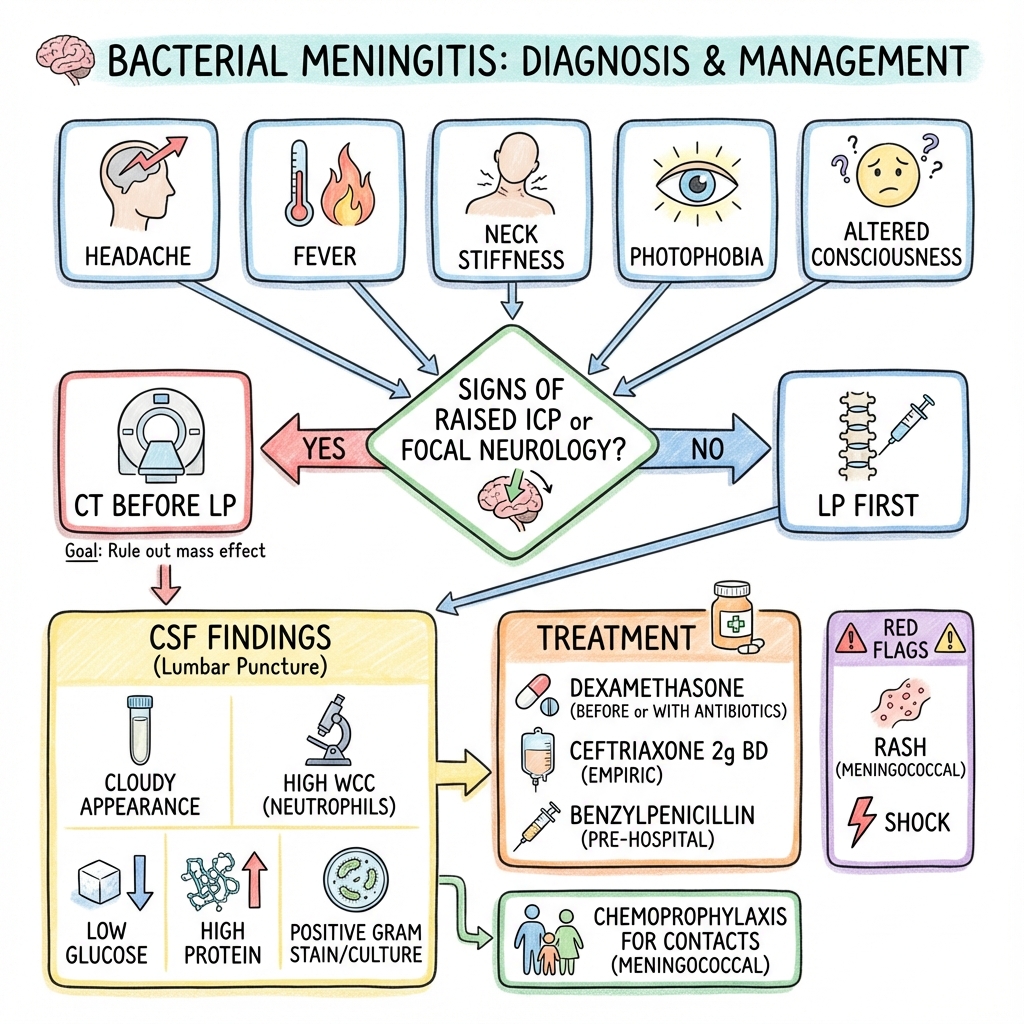
Bacterial meningitis is a life-threatening infection of the meninges requiring immediate recognition and treatment. Common pathogens include Streptococcus pneumoniae, Neisseria meningitidis, and Listeria monocytogenes (in elderly/immunocompromised). Classic features are headache, fever, neck stiffness, and altered consciousness. Lumbar puncture reveals purulent CSF with high WCC (neutrophils), low glucose, and elevated protein. Treatment involves empirical antibiotics (ceftriaxone) with dexamethasone started before or with antibiotics to reduce complications. Meningococcal disease requires contact prophylaxis.
Key Facts
- Definition: Bacterial infection of the meninges
- Incidence: 1-2 per 100,000 per year
- Peak Demographics: Infants, elderly, immunocompromised
- Pathognomonic: Fever + headache + neck stiffness + CSF findings
- Gold Standard Investigation: Lumbar puncture (CSF analysis)
- First-line Treatment: Ceftriaxone + dexamethasone
- Prognosis: 10-20% mortality; neurological sequelae common
Clinical Pearls
Timing Pearl: Do not delay antibiotics for LP - give within 1 hour of suspected diagnosis.
Dexamethasone Pearl: Give BEFORE or WITH first dose of antibiotics - reduces mortality in pneumococcal meningitis.
LP Pearl: CT before LP only if signs of raised ICP, focal neurology, or immunocompromised.
Algorithm
Empirical Antibiotics
| Age/Risk | Regimen |
|---|---|
| Adults | Ceftriaxone 2g BD |
| Over 50/immunocompromised | Add Amoxicillin 2g 4-hourly (Listeria) |
Dexamethasone
- 10mg IV QDS x4 days
- Give BEFORE or WITH first antibiotics
-
van de Beek D et al. Clinical features and prognostic factors in adults with bacterial meningitis. N Engl J Med. 2004;351(18):1849-1859. PMID: 15509818
-
McGill F et al. UK joint specialist societies guideline on meningitis. J Infect. 2016;72(4):405-438. PMID: 26856358
Viva Points
"Bacterial meningitis: Classic triad - headache, fever, neck stiffness. CSF: cloudy, high WCC, low glucose. Dexamethasone BEFORE antibiotics. Ceftriaxone empiric."
Last Reviewed: 2026-01-01 | MedVellum Editorial Team